Turbine bypass improvement studies for a Waste-to-Energy plant
Improving the turbine bypass system: context and challenges
As part of the improvement of its turbine bypass system at a live Energy Recovery Facility (ERF), our client Viridor commissioned fortil to carry out the associated engineering studies. The primary objective was to define a new low-flow bypass system, connected to the existing one, in order to improve steam flow management upstream of the turbine during transient operating phases.
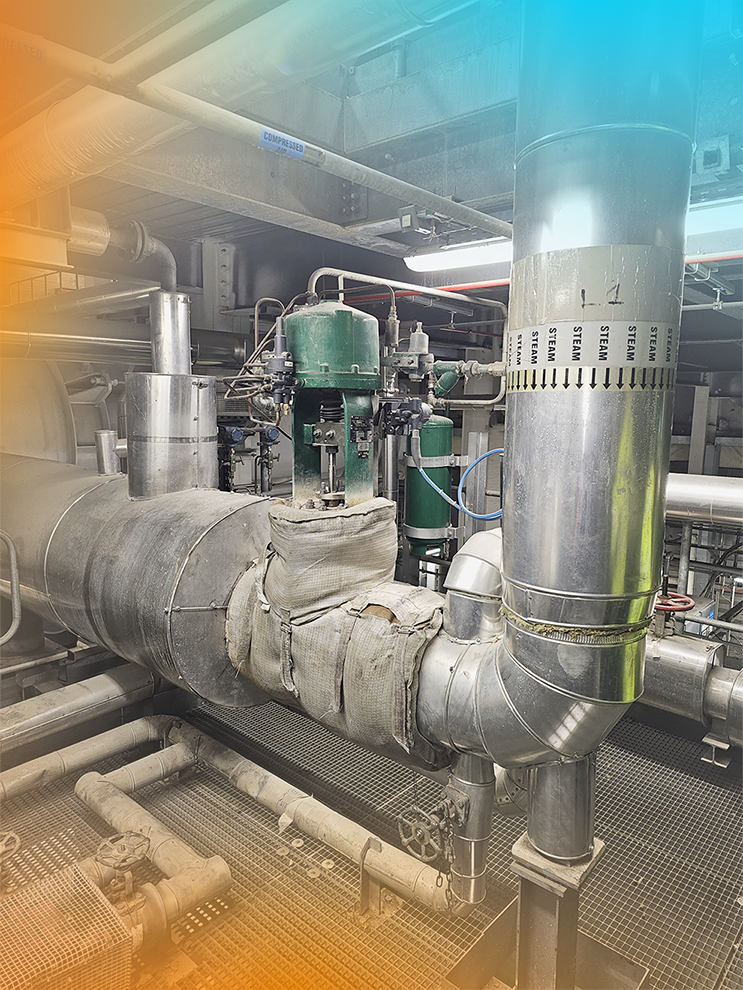
To meet this challenge, our teams therefore had to design the entire new circuit: the bypass valve responsible for steam pressure reduction and desuperheating, the full associated piping network, and all the instrumentation required for its control.
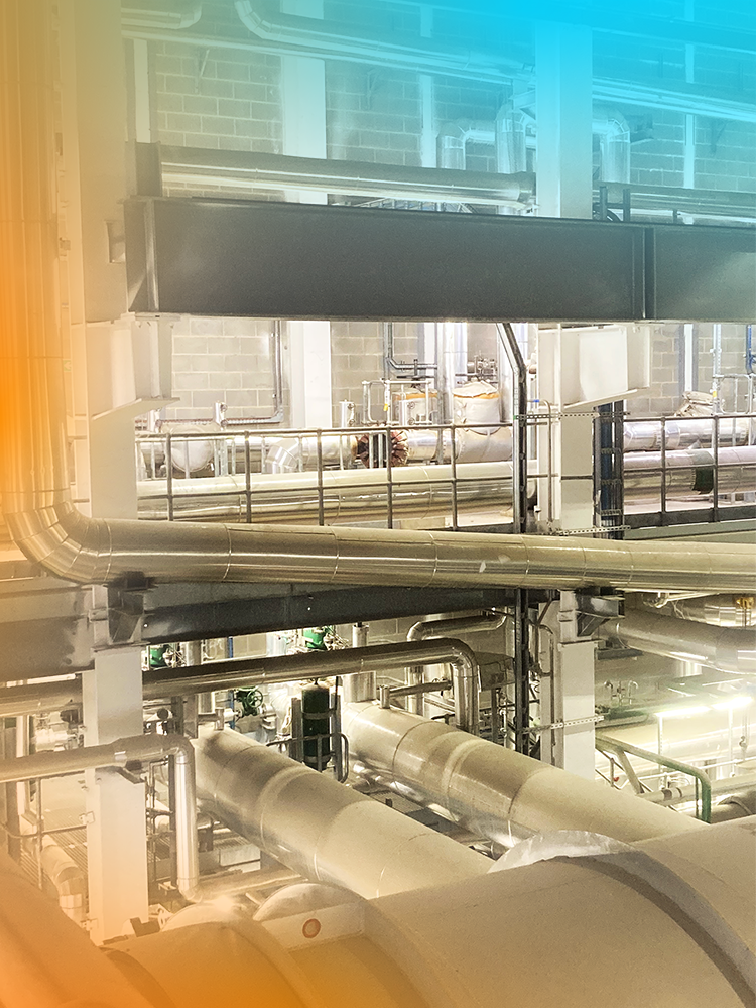
Furthermore, prior to the engineering studies themselves, a 3D scan of the turbine area was carried out on site. This preliminary step provided an accurate survey of the existing environment while optimizing the integration of the modifications into the existing layout.
Project summary
6 months
United Kingdom
Waste-to-Energy
4 experts
Process, Piping and Automation Engineering: A Multi-disciplinary Approach
Process engineering: defining the new bypass circuit
Process studies formed the first key step of the project. Based on the operating data provided by Viridor, they enabled our engineers to define the entire new turbine bypass circuit. In practice, this work included:
- updating the P&ID (Piping and Instrumentation Diagram),
- specifying the pressure reduction valve and associated valves,
- defining the steam desuperheating system suited to the site's operating conditions.
This process phase thus laid the technical foundations necessary for all the subsequent discipline-specific studies.
Industrial piping engineering: integration into the existing environment
The industrial piping studies played a decisive role in ensuring the optimal integration of the new pipelines — water, steam, and condensate — into the existing network. To that end, our piping engineers and designers drew notably on:
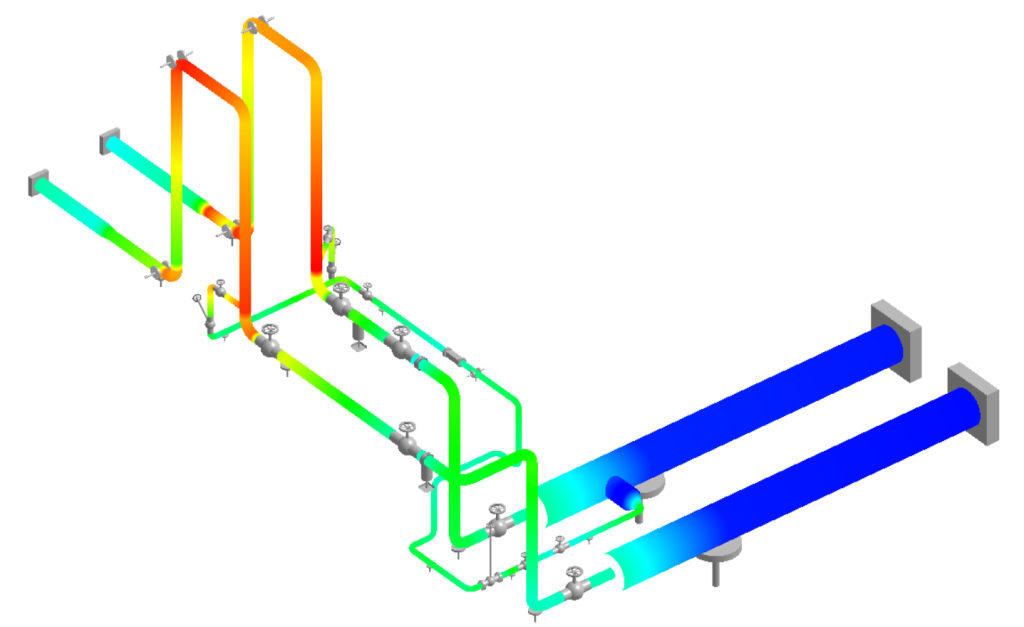
- flexibility calculations to verify the mechanical integrity of the pipelines under thermal and pressure loads,
- the site surveys carried out beforehand, supplemented by the 3D scan of the turbine area, to ensure the routing feasibility of the new pipelines.
Based on these data, our teams then defined the materials, wall thicknesses, routing, and pipe supports required to guarantee the long-term mechanical integrity of the installations at this ERF.
Automation engineering: autonomous control and DCS integration
The automation studies enabled us to design a turbine bypass system that operates fully autonomously and is seamlessly integrated with the plant’s existing DCS (Distributed Control System). Thanks to this approach, the new system is therefore capable of automatically managing transient operating phases without any manual intervention from the operator.
In addition, our experts attended the site during the commissioning phase to support the operator and validate the correct operation of the entire system. This field support consequently helped secure the start-up process and optimise settings under real operating conditions.
A landmark project in multi-disciplinary Waste-to-Energy engineering
This project perfectly illustrates the added value of multi-disciplinary engineering for live Energy Recovery Facilities. By combining our process, industrial piping, and automation expertise, fortil effectively enabled Viridor to significantly improve steam flow management in its turbine during transient phases, while guaranteeing the safety and integrity of the existing equipment.
By the same token, this type of intervention — covering both new-build projects and rehabilitation or operational improvement projects — is, furthermore, at the very heart of what our teams deliver in the Waste-to-Energy sector.
Share this article on social medias
More energy news