Front-end engineering design for the modification of a district heating network
Increasing Thermal Capacity on a Waste-to-Energy Facility
As part of the development of its district heating network, integrated into a waste-to-energy facility, our client launched a project to increase the thermal output of its site. A global player in water and waste management, they entrusted fortil with the Front-End Engineering Design (FEED) studies required to increase the available thermal capacity.
The primary objective was to raise the thermal capacity injected into the network from 15 MWth to 32 MWth, while making use of the existing infrastructure of an operational waste incineration plant. This project is part of a broader drive to optimise energy recovery from waste — a central challenge in today’s push for energy performance and decarbonisation.
Project summary
1 month
France
Waste-to-Energy
3 experts
A project within a constrained industrial environment
fortil’s scope covered the modification of an existing industrial facility, with strict requirements around continuous site operation. The Front-End Engineering Design studies were therefore conducted with safety, accessibility and maintainability in mind. These constraints are central to both district heating networks and waste-to-energy plants.
Our dedicated engineering team managed the full FEED scope, combining process engineering and general arrangement engineering in a coherent and integrated approach.
Energy optimisation and equipment sizing
The process engineering studies defined the equipment and operating conditions needed to meet the project’s energy targets. Key deliverables included:
- Specification and sizing of the steam turbine and the new steam-to-water heat exchanger (hydrocondenser);
- Sizing of pumps and pipework, including nominal diameter (DN) calculations and pressure drop analysis;
- Definition of flow rates, temperatures and pressures across each network;
- Selection of valves, filters and instrumentation.
The studies produced Process and Instrumentation Diagrams (P&IDs), a process operating description, and the technical documentation required for vendor enquiries.
Equipment layout and industrial integration
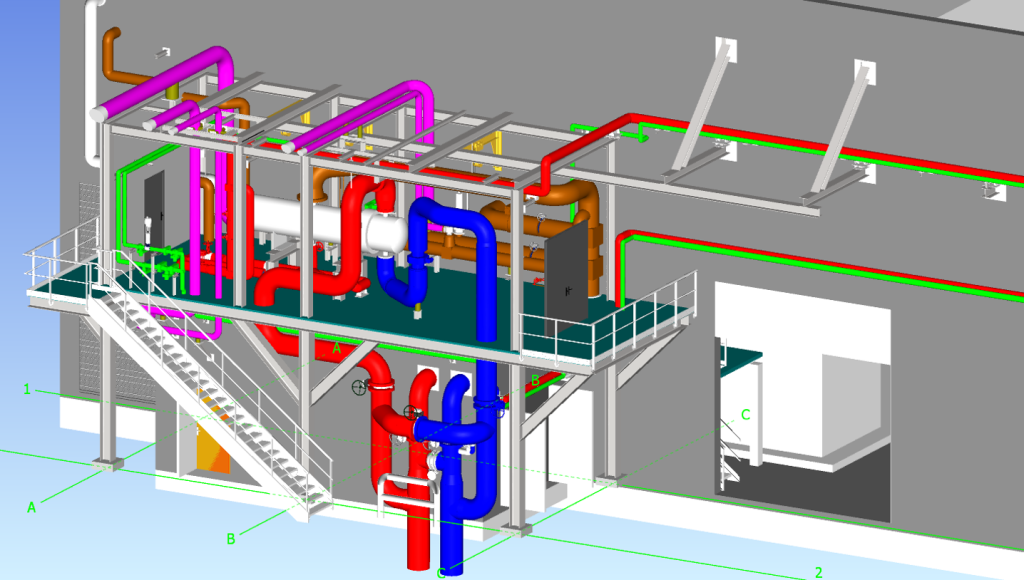
Building on the process engineering outputs, the general arrangement engineering phase focused on positioning equipment, connecting systems, and ensuring safe, maintainable operation on site. This phase covered:
- Design of new pipework and pipe supports;
- Maintenance study for the heat exchanger tube bundles;
- Preliminary sizing of the new building's steel structure;
- 3D digital model validation of the final layout.
The studies resulted in pipework and support drawings, structural plans, and a material balance, ensuring all equipment and systems could be constructed under optimal conditions.
A representative reference in waste-to-energy engineering
This project is a strong example of our expertise in Front-End Engineering Design for waste-to-energy facilities. Through an integrated approach combining process, piping and general arrangement engineering, we support our clients across the full project lifecycle — whether for greenfield projects or rehabilitation work.
Share this article on social medias
More energy news