
fortil Group, industrial partner of Otrera New Energy in nuclear engineering
In May 2026, Otrera New Energy announced a €17 million funding round to develop its 4th-generation reactor, a key milestone for this French deeptech company, founded in 2024 by Frédéric Varaine. Our nuclear engineering teams are working alongside Otrera on the ground, throughout the detailed design phase. An academic partnership on sodium fast reactors further reinforces this expertise.
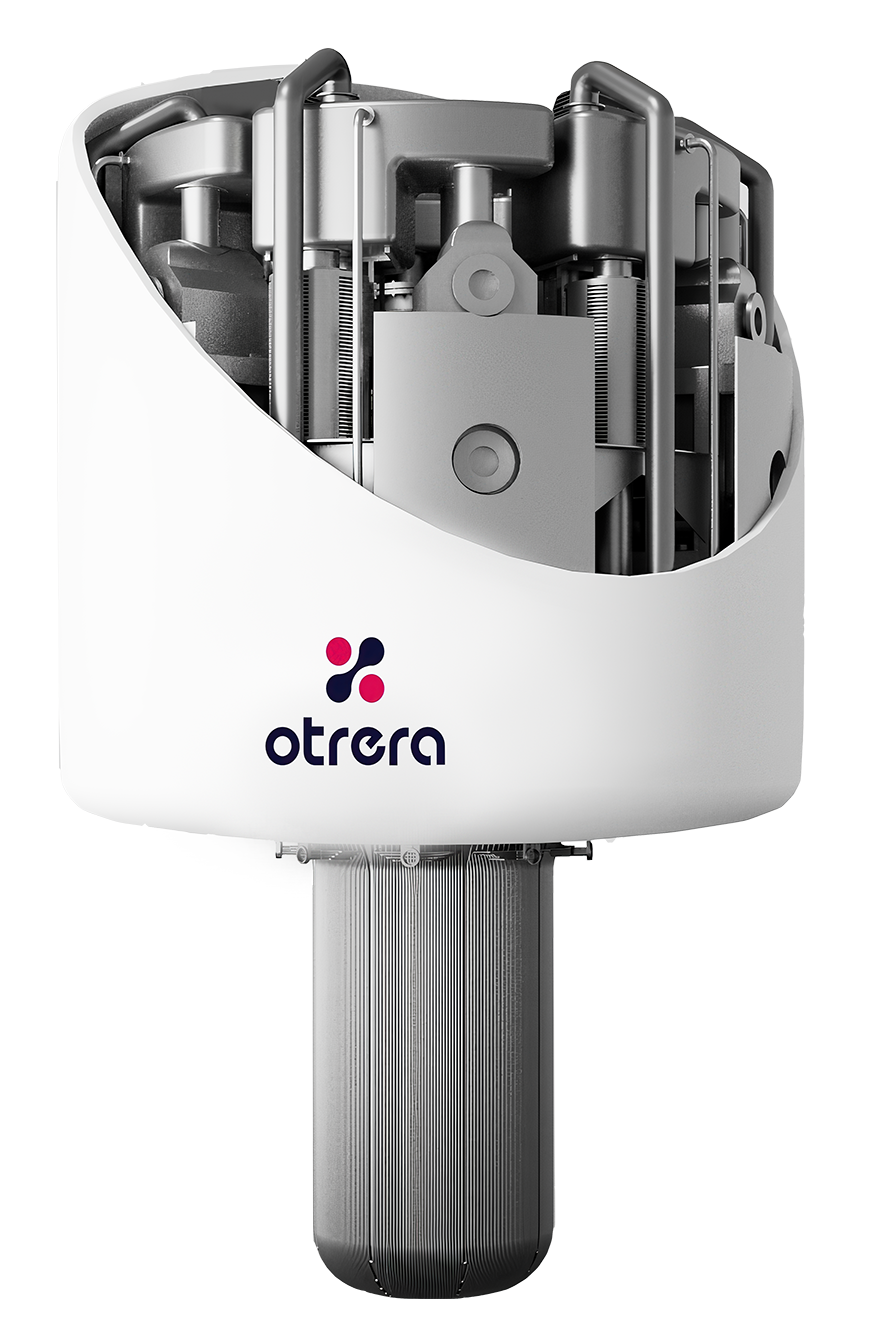
©Otrera – All rights reserved
Otrera New Energy: a French consortium for next-generation nuclear energy
France is accelerating its push into next-generation nuclear energy, and nuclear engineering sits at the heart of this momentum.
French deeptech company Otrera New Energy has announced the closing of a €17 million funding round. The proceeds will finance the detailed design phase of its innovative reactor: a sodium-cooled fast neutron reactor (SFR), a 4th-generation technology built on over 60 years of French research, led in particular by the CEA.
The funding combines equity and grants from the France 2030 programme. It brings together a strategic, all-French consortium: EDF, returning to a sodium project for the first time since 2019, Groupe REEL, Onet Technologies, Groupe ADF, Ingerop, fortil Group, Groupe SNEF, NGE, and several regional and sector-specific funds.
Why the sodium fast reactor pathway is strategically important for French nuclear engineering ?
The choice of the sodium-cooled fast neutron reactor is a deliberate one. France has been exploring this technology since the 1960s, through Phénix, Superphénix and Astrid. The approach offers unique potential:
- recycling spent fuel from existing PWR plants,
- significantly reducing ultimate radioactive waste,
- and reducing dependence on natural uranium.
Tomorrow’s nuclear energy is no longer solely about producing low-carbon electricity. It is also about solving a long-term strategic equation, one of fuel cycle management and energy sovereignty. An ambition that demands advanced nuclear engineering expertise, from design through to industrialisation.

Sodium fast reactor technology is something France has mastered for 60 years. Otrera New Energy is building on that heritage to develop a regenerative form of nuclear energy, capable of recycling its own fuel. In ten years, 4th-generation reactors will be part of Europe’s energy mix. We will be able to say we were contributors.
– Bosko Jovanovic, Head of Nuclear Activities at fortil
Our role as engineering design office on the detailed design phase
Otrera New Energy has completed its preliminary design studies (APS). The project has now entered its detailed design phase, which will run for two and a half years.
We are acting as the engineering design office across the full scope of this phase, running several workstreams in parallel.

Electrical system architecture
Our engineers lead the design of the electrical distribution system (EDS) across all site buildings. The core requirement: ensuring the plant remains powered under all circumstances — a critical safety constraint for this type of installation. Given that the EDS underpins all other systems, fortil also leads cross-system architecture reviews, ensuring each design engineer receives the right input data and delivers the right output data to their counterparts.

Dependability and integrated logistic support
Dependability (RAM – Reliability, Availability, Maintainability) is a discipline in its own right. It ensures the reliability, availability and safety of the installation over time.
Our experts work closely with Otrera’s Nuclear Safety team. Their remit: analysing the risks associated with each system and identifying concrete solutions to manage them. This work also structures the Integrated Logistic Support (ILS). In other words, the ability to answer a fundamental question for any nuclear installation: in the event of a failure, what measures are in place to bring the installation back to a safe state?

Process engineering
On the process side, our engineers work on the reactor’s fluid systems: liquid sodium, nitrogen, argon, steam. Drawing on technical documentation, they model and formalise the architecture of these systems in graphic form.
They also apply structured engineering methods through the production of precise technical deliverables: process flow diagrams (PFDs) and piping and instrumentation diagrams (P&IDs).
Quality and configuration management
We support Otrera New Energy in structuring its quality assurance and configuration management processes. The goal: ensuring the traceability and consistency of engineering studies as they evolve.

Mechanical design and digital mock-up
A dedicated team of mechanical and general arrangement engineers is mobilised to develop the facility’s digital mock-up (CAD). We take ownership of specific equipment items, conducting functional analysis, requirements specification and design work, producing a full engineering package ready to be handed off to manufacturing partners.
Industrial support
Our teams provide industrial support to Otrera New Energy on selected mechanical reactor prototypes: procurement specification, welding and inspection requirements for prototype fabrication, and manufacturability analysis ahead of tender processes.
Working from Otrera New Energy’s pre-concepts, we develop reliable designs, manage cost estimates and oversee the fabrication of certain prototypes. The first prototype, the fuel assembly skeleton mock-up, is already underway with Foure Lagadec (Groupe SNEF).
An academic partnership to deepen our nuclear engineering expertise
Beyond our work with Otrera New Energy, we have established an academic partnership with the CEA focused on sodium fast reactors. This collaboration allows us to strengthen our technical expertise in this technology and build the skills needed to support 4th-generation projects over the long term.
Nuclear engineering, from research to industry
An academic partnership with the CEA, industrial projects in France and internationally: our teams support nuclear projects from design through to prototyping.
Share this article on social medias